I was interviewed by Fauziah Ibrahim on ABC News 24’s evening program. The segment was looking at how prepared Australia is for the coming robotics and artificial intelligence revolution.
This article was co-authored by Mitchell Eddy who has recently completed a Masters of International Relations at the University of Melbourne that included a placement at the think tank, Per Capita.
When the industrial revolution hit in the 1800s, countries with large disparities in wealth, low property ownership, deficient democracies and disparate education systems were left behind.
There’s a new industrial revolution just around the corner, driven by artificial intelligence and robotics. Deterioration within the key institutions of suffrage, education, and land policy indicate that Australia may be one of the countries left behind this time.
The first millennium
One way to anticipate the future is to look to the past.
British economist Angus Maddison has estimated that in the year 0, the population of Western Europe was 24.7 million. 1,000 years later it was 25.4 million – an increase of just 700,000. Total global population increased by only 37.3 million in a millennium. If we had continued at this pace, in 2015 there would have been 312 million people on Earth.
Gross domestic product fared even worse than population. Between the year 0 and 1,000, GDP per capita was stagnant or fell across all of Maddison’s seven global zones.
Over the next 800 years, the pace quickened (a little). World population quadrupled to crack the billion for the first time. By 1819, the Eastern European population of 91.2 million generated some $60.9 billion worth of stuff (1990 International $) or $665 per person.
Then in 1820 everything changed.
Well, sort of.
Fuelled by a potent mix of technology, ideas, appropriated resources and a distressing number of slaves, the Great European powers began to make themselves Great. Certain colonies prospered as well. Countries like the United States and Australia increased their output markedly, quickly distancing themselves from some of the other colonies.
Africa sample: Egypt, Ghana, Morocco and South Africa. [Maddison, 2001]
What went right (or wrong)?
There are two key explanations for the changing fortunes of different colonies: factor endowments and institutions (or some combination of the two).
In Guns, Germs and Steel Jared Diamond proposed a particularly entertaining version of the former, where the ability to grow nutritious grains, the presence of draft animals and immunity-inducing epidemics saw Europe come to dominate the world.
Others have argued that, while factor endowments were important, it was the institutions that they gave rise to that really made the difference. With a focus on entrepreneurship and property rights, MIT professor Daron Acemoglu and his colleagues have argued that the presence of disease in certain colonies led to the development of “extractive” economies. Low settlement rates saw a small group of elites seek to concentrate power, appropriating as much wealth as possible and exporting resources back home.
Conversely, places without tropical diseases became “settler colonies”. When Europeans settled these places, the institutional arrangements there mimicked those of the home country. Land and livestock were privately owned by new migrants, which incentivised increases in productivity. Once the industrial revolution came to town, these colonies dramatically increased their output.
Without the hope of social mobility or the pressure of competition, extractive economies failed to take advantage of new opportunities and were left standing at the station while the Industrial Revolution brought wealth to the rest of the world.
While the “private property prescription” is a temptingly simple answer, evidence suggests that a more crucial factor appears to be whether a country developed institutions with a broad franchise (read: equality and equal opportunity) or narrow franchise (inequality and lack of social mobility). Private property certainly has a role to play, but only as part of a wider suite of institutional arrangements.
Characteristics of success
When we look across those countries that did well, a number of key factors stand out.
Suffrage: Countries that broke away from the pack in the 1800s were those in which citizens could vote. This makes sense; the more people that can have a say in government, then the more inclusive government policy should be. The rapid growth of the USA and Australia coincided with a high proportionate of the population able to vote.
In the USA 79.2% of the adult male population voted in the 1844 presidential election. In Australia, economic qualifications for voters were removed in South Australia, Victoria and New South Wales in the 1850s.
Conversely, colonies that were left behind often saw the vast proportion of the population excluded from participating in government elections. Indeed, it was not until the very late 1800s that a number of Latin American countries saw more than 1 or 2% of people voting
Education: Educated people are more productive, flexible and are able to take advantage of technological change. Australia’s egalitarian society saw educational opportunities extended to a broad spectrum of the populace. By 1844, approximately half of its non-Indigenous children were receiving a formal education. By 1901, literacy rates were around 80%.
This occurred in stark contrast to other colonies (including other British colonies, such as in the Caribbean). Despite immense wealth being generated, basic schooling infrastructure was not established on a broad scale – elites sent their children to private schools while other children went without. Up to 1900, literacy rates remained at or below 30% in Bolivia, Brazil, Guatemala, Honduras, Mexico and Paraguay, and was likely below 30% in Columbia, Peru, Puerto Rico and Venezuela.
Land policy: Epitomised by the encomienda system (a system popularised by the Spanish Crown, under which conquerors were rewarded with the labour of certain groups of people), land policy in countries that were left behind attempted to shut people out of the property market. Land was selectively offered in large chunks at prices only the wealthiest could afford.
In Australia, land policy was designed to encourage new migrants and sought to break down the system of class privilege that calcified Mother England. Country lands were sold for as little as £1 per acre, payable over time, and acreages were limited to prevent large holdings.
Future consequences?
Australia is becoming a more unequal country. Institutions that had previously fostered greater equality now do the opposite.
This is a problem because it was Australia’s relatively low levels of inequality that put us in an advantageous position during the last industrial revolution. Rapid advances in robotics, automation and Artificial Intelligence suggest a new industrial revolution is just around the corner, but Australia’s key institutions have been so badly eroded that we may be disadvantaged when the full force of this technological change hits.
Societies with these characteristics performed particularly badly during the last period of rapid technological change. Many have never recovered. We should be concerned that the institutions that once allowed us to pull ahead may soon be the reason we fall behind.
The forward march of the neoliberal consensus had for decades appeared to be unstoppable.
Somehow the wealthy elite managed to hoodwink us into believing that competition was the key to prosperity, including competition between workers. They played down the inherent divergence of interests between employees and employers and mounted a multipronged attack on organised labour, resulting in workers competing against each other rather than working in solidarity for their shared interests.
Massive global trade deals touted as “free trade” were drafted in secret to favour and protect the power of the world’s biggest corporations and were championed by both sides of the narrow political divide in most of the world’s countries, Australia included.
Across much of the developed world, particularly the English-speaking world, this neoliberal paradigm had achieved political consensus. Here in Australia it was primarily the Hawke/Keating governments that cemented the consensus, privatising public institutions in the name of competition (and creating private monopolies and oligopolies in the process), taming unions into irrelevance and opening the economy to competition. The Coalition could never have gotten away with such neoliberal reforms.
It was this consensus that made neoliberalism appear unassailable for decades. Even the Global Financial Crisis didn’t result in any meaningful change to an obviously corrupt system but merely reinforced the subservience of the public to the financial elite as the former bore the costs of the latter’s decadence and folly.
However, it turns out that the consequences of the global financial crisis were on slow burn. The Occupy movement saw the problem but fizzled out due to lack of solution. There was a brief opportunity where established power was weak but progressives had no coherent plan with which to step into the breach.
When the dominant paradigm is breaking down, a new narrative is needed. If a new narrative is not created, old ones will re-emerge. That’s Trump and Brexit. There is nothing new in either story; bar the details.
Nationalism and xenophobia combined with nostalgic delusions of a past that never was are old, tried and true rally cries for the disillusioned. That said, the negative elements of Trump should not be overplayed. Many voted for Trump despite these things, not because of them. They voted for Trump because he wasn’t the status quo. In addition, many progressives didn’t vote, seeing an option between a misogynist, racist liar and the deeply imbedded political establishment represented by Clinton as a no-win choice. What would have been really interesting, is if Bernie Sanders had run against Trump.
The neoliberal consensus is broken but Trump will not give the disillusioned what they want. He has no serious or plausible plan to “make America great again”. This represents the biggest opportunity for progressives, both in the US and elsewhere, since the 1970s. If we can create a narrative and a genuine plan to replace neoliberalism, then we can step into the void that Trump will inevitably leave (and that is opening in Australia and elsewhere). The established political elite will have a great deal of trouble stepping back into that void with any hope of stability. They don’t have what the people want and their excuses are no longer palatable. They have been seen to be wearing no clothes.
There is a path from here to a reinvigorated and practical progressive politics. In fact, a populist cracking of the neoliberal consensus may have been the only such path – though one form of it could have seen Bernie Sanders in the White House instead of a serial sexual predator and bully.
Nationalism is a reflexive response to a loss of solidarity and belonging. Neoliberalism, and its underpinning in neoclassical economics, sees labour as a commodity just like any other. Absent is the acknowledgement that labour is the people who should be the beneficiaries of the system, not just another exchangeable part in it. Thus, labour (people) is expected to be mobile; willing to move wherever work is. It doesn’t matter that this dislocates people from family and friendships, that’s not part of the equation. When you include employment created as a competition between workers, you have a perfect recipe for isolation and loneliness.
The nuclear family has become the fundamental social unit, often dislocated from a broader support network. All of this combined with long commutes to work and high housing costs creates a society where everybody is perpetually busy and tired with no meaningful sense of belonging or purpose. Is it any wonder that people are abandoning business-as-usual politics and politicians?
A vote for Clinton was a vote for business-as-usual. A vote for Trump was a vote for shaking things up. Things do need shaking up.
We can shake things up in a positive, progressive and inclusive way and if we’re to manage it then we need to speak to the disillusioned and disenfranchised. Efforts to reinvigorate and modernise unions and other forms of worker solidarity are critical, as are careful consideration of urban planning and decentralisation.
Moving towards a four-day work week or a six-hour working day would help reduce unemployment, reduce pressure on families and create more time for socialising and community building.
In short, right now we have an opportunity to wrest some power from those who benefit from labour as a commodity and return it to the population. We should be asking what it means to live a good life in the 21st century and then shaping society in such a way that people can live that life; not just the wealthy, but all of us.
This is a real vision of the future to offer the disillusioned and disenfranchised. We should measure the progress of our society not by GDP but by the capacity of the broader population to live a fulfilling life. Of course, the health of the economy is important but only in that it serves the people. Growth as an ideology, untethered from human wellbeing, is ludicrous.
What’s missing from the modern political narrative is any sense of value or of progress aside from narrow and unfulfilling consumerism. In recent years, stagnating wages and out of control housing costs are combining to deny people even the illusion of progress through consumerism. This is a great opportunity for progressives but mere facts and arguments are incapable of creating change; we need a story of hope, progress and redemption. Like what Trump offered but without all the lies, misplaced reminiscences, bigotry and xenophobia. Doesn’t sound too difficult to me.
First published in The Monthly Friday, 30th September 2016
The first of October is the International Day of Older Persons. The United Nations want us to put the spotlight on age discrimination, and so we should. A perfect storm is brewing against older workers: unless we think carefully about it, we’re going to end up with a huge cohort of older Australians spending 15 or 20 years on the dole, living in poverty, while they wait to qualify for the Age Pension.
Age discrimination is already rife in Australia, with over a quarter of older job seekers reporting being affected by it. When you combine this with the push to lift the Age Pension access age to 70, the rise of contract and casual employment, and the current and projected impact of technology on the demand for skills, the situation for many older workers looks grim. If you’re an older woman, trying to return to the workforce after raising children, then things are going to be particularly hard for you.
Many studies have been published over the last few years predicting that vast numbers of jobs (or tasks) are likely to be automated in the coming decades. There are differences between the predictions, but there are areas where they all agree. A recent report by the Committee for Economic Development of Australia estimated that 40% of Australian jobs are highly like to be replaced by artificial intelligence (AI) and robots in the next ten to 15 years. That’s a staggering change in such a short space of time. In a few decades, almost nobody will be driving vehicles for a living, and that transition is expected to begin in the next few years in wealthy western countries. (Uber and Lyft are already trialling self-driving cars with customers in the US – albeit with human engineers still, for the moment, sitting in the driver’s seat).
Some are predicting the demand for human labour will decrease – in other words there will actually be less jobs – while others suggest that this technological change will be like every other since the industrial revolution, where some jobs are destroyed while others are created. It doesn’t matter which is correct for many older workers: if their existing job is destroyed, their chance of retraining and restarting in a new career is slim.
This isn’t a dystopian vision of a distant future. It’s already happening.
….
Head over to The Monthly to finish reading the entire article.
‘The logic that persistent government deficits mean that the nation is living beyond its means is faulty in several respects.’ Photograph: Mick Tsikas/AAP
All the assertions in Malcolm Turnbull’s statement about the budget being a fundamental moral challenge are flawed. Let’s look at them one at a time
This article was originally published in The Guardian.
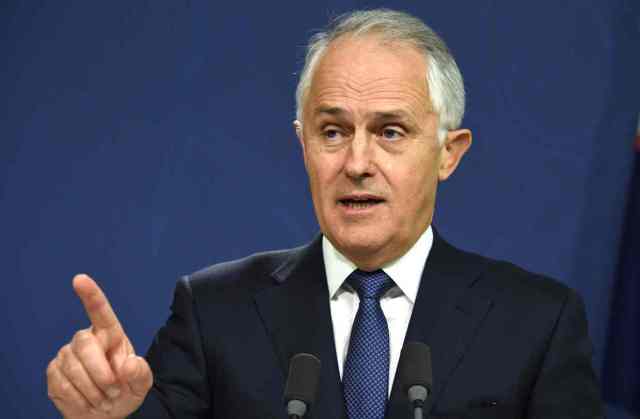
The prime minister, Malcolm Turnbull, has labelled government budget deficits and debt as a “massive moral challenge”. This, to use the technical term, is complete and utter bollocks. In a leaked briefing to coalition backbenchers, Malcolm Turnbull wrote:
This is a fundamental moral challenge. How long are we prepared as a nation, as a generation, to load more and more debt on to the shoulders of our children and grandchildren? How long are we prepared to live beyond our means, to live effectively on the credit card of the generations that come after us?
The assertions that sit behind this paragraph are all flawed. Are we living beyond our means? No. Are we living off the credit card of future generations? No. Does Australian government debt rank alongside other identifiable major moral challenges of our time? Absolutely not. Let’s take them one at a time.
We are living beyond our means
The logic that persistent government deficits mean that the nation is living beyond its means is faulty in several respects.
We could eliminate all superannuation concessions for high income earners, get rid of negative gearing and the concessional treatment of capital gains, not give the planned tax cuts to high income earners, and not give the planned tax cuts to companies and we’d more than balance the budget. Given that, how can it be claimed that we’re living beyond our means? This is an accounting issue, not a fundamental economic problem.
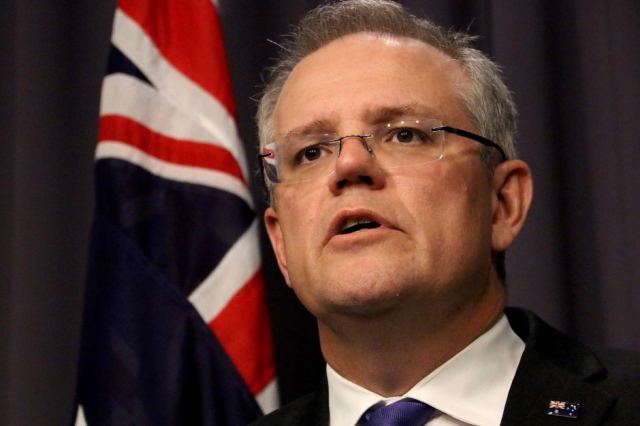
Even if Scott Morrison’s nightmare scenario comes true, and we end up with $1tn of debt, that would be like a salary earner on $100,000 having a debt of a little over $200,000. It’s a significant number but a long way from insurmountable (particularly for the entity that creates the currency). It’s even less scary when you realise Scott Morrison was using the old trick of using gross debt rather than net debt as a poorly disguised way to inflate the figures.
Future generations will suffer under the burden of our debt
Our economy has been so thoroughly financialised that many find it very difficult to see the real economy for all the money. The living standards of the population are determined by the goods and services that the population is able to produce. Seems pretty straight forward, doesn’t it?
How exactly then, do we imagine future generations will suffer as a result of us living on their credit card? As Warren Mosler is fond of asking, can they send goods and services back in time to repay the debt we have incurred? Of course not, it’s a ludicrous notion. Their standard of living will, like ours, be dependent on their capacity to produce goods and services.
The only way future generations will suffer as a result of our debt is if it’s in a foreign currency (it’s not) or if economically illiterate politicians make them suffer.
As an illustration, the period of highest government debt to GDP in our nation’s history was at the end of the second world war. Have you heard all the stories about how the post war generations suffered under the burden of all that debt? No? Me neither. Those post-war decades are often referred to as the “golden years” with unemployment hovering around 2% (somehow thought impossible now) and economic growth consistently strong.
The deficit is a fundamental moral challenge
Given all of the above, can we really conclude that the budget deficit is a fundamental moral challenge? Here’s a small sample of other possible candidates for fundamental moral challenges:
Syria
The prolonged civil war in Syria is resulting in untold death, suffering and displacement. Should we be taking a moral stand on this situation? Should we be doing more to help those displaced?
Same sex marriage
Here’s a moral challenge, one that asks some fundamental human rights questions. Where’s Turnbull’s strong leadership on this one?
Climate change
Let’s face it, Kevin Rudd was right about climate change – till it was dropped like a hot potato, that is.
Inequality
Definitely one of the great moral challenges of our time is the gulf in wealth and resources between wealthy nations and poor nations as well as the growing gap between wealthy individuals and the poor within Australia. Can we call ourselves a democracy and a meritocracy when there are great disparities in educational opportunity and healthcare? Should a child born to poor parents have the same opportunities as one born to rich parents? There’s a moral challenge worth sinking your teeth into, prime minister.
No need to jump at economic shadows.
Warwick Smith is a research economist at progressive think tank Per Capita.
I was on 2ser’s Sunday night program The Mix this week talking about the budget and, in particular, the government’s new Prepare-Trial-Hire (PaTH) program for youth unemployment. You can listen to the program on the link below. My contribution starts at about the 45 minute mark.
Budgets are a good opportunity to see through the spin to what the government really wants. Forget the Treasurer’s speech and the budget overview, the truth is in the measures themselves. Generally things the government increases taxes on are discouraged and things it reduces taxes on – or spends money on – are encouraged.
So, what does the 2016 budget tell us about the things the government wants us to do and not do?
Smoking
Let’s start off with a pretty straightforward, textbook example. The government is raising tobacco excise (tax) by 12.5% per year for four years. this will lift the price of cigarettes to around $2 each by 2020.
Tobacco taxes are generally considered to be a good thing. Not only is tobacco use harmful to the individual, it also creates very substantial public health expenditure. Taxing the consumption of tobacco discourages smoking by increasing the price and raises revenue that contributes to health costs associated with smoking.
This story is complicated by the fact that tobacco is addictive. Because of addiction, price signals aimed at reducing consumption are often ignored by established smokers, many of whom are low income earners. This squeeze on the budgets of many low income earners has undesirable side effects, such as reducing expenditure on beneficial goods and services. However, the price signal does discourage potential new smokers from becoming addicted and ex-smokers from starting again and this is surely a good thing.
Jobs… or free labour?
The A$750 million PaTH (Prepare-Trial-Hire) program to encourage job seekers into internships, followed by subsidised employment, is aimed at job creation. The idea here is to encourage employers to give a person, who’s been unemployed for six months or more, a chance to prove themselves and develop skills through an unpaid internship (the government gives the intern $100 a week extra on top of Newstart).
Not only does the potential employer get an intern for free for four to 12 weeks, they also get $1000. The pros and cons of this measure are complex. The Australian Council of Social Services (ACOSS) has applauded PaTH. It has been arguing for subsidised employment as an alternative to work for the dole programs for some time. Professor Andrew Stewart from the University of Adelaide has warned that the program could actually destroy jobs rather than create them if employers opted for a free intern over a paid employee. It seems there is a lot of potential for exploitation.
The reality is that there needs to be greater demand for goods and services before businesses will employ more staff. The unemployment level in Australia is at 5.7%, meaning there’s no shortage of people willing to fill available jobs. This tells us that there aren’t many opportunities for companies to increase production of goods or services that are constrained by the availability of low-skilled labour at the minimum wage.
It is possible that the wage subsidy of between $6,500 and $10,000 included in this government package could make wage costs sufficiently low to encourage extra hiring. If this were so, what would happen to these employees once the subsidy runs out? Back on the dole?
This brings us neatly to the main slogan of the budget “jobs and growth”.
Company tax cuts and business
Company tax cuts are at the centre of the government’s claims to a jobs and growth budget. It’s standard rhetoric from business groups and the government that reducing company taxes will give companies spare cash that will “trickle down” through greater employment and increased wages and this will increase economic growth. Unfortunately, the actual evidence backing this up is slim. Even Treasury’s modelling used to support the measures puts the impact at an extra 1% increase in GDP over 10 years. That figure is so small that it might as well be zero.
The budget extends provisions for small business to write off small capital expenditure immediately, rather than through depreciation over years. Capital items, like computers, machinery, furniture and other equipment, lose value over time as they wear out or are superseded. These are the things that businesses usually deduct from taxable income.
What this measure means in practice is that the entire purchase of, for example, a new computer for a small business is a direct tax deduction in itself, instead of only the drop in value of that computer during this financial year. This measure was introduced as temporary stimulus in the last budget and has now been extended. In addition, the definition of small business has been expanded to include businesses with up to $10 million in turnover.
This is short-term economic stimulus. The impact will primarily be to bring forward expenditure that would have happened anyway. In other words, it’s likely to create jobs and growth now at the expense of jobs and growth later.
Ideology
We know the Coalition are advocates of small government. They want to reduce taxes and minimise the role of government in society. The majority of the Australian people believe we should be increasing taxes in order to maintain or improve on the quality of services, particularly education and health. This conflict between public opinion and government ideology means that the government cannot always be transparent about their goals. There’s nothing new in this.
Examining budget measures and their stated aims and comparing them to the evidence is a good way to uncover the truth behind what the government claims it is trying to do.
We should stop treating all new taxes and all increased taxes with hostility. ABC: Tim Stevens
According to the Coalition, we can’t raise taxes nor introduce new taxes. And if cutting expenditure is off the table following the dire experience of the 2014 budget, what’s left? Warwick Smith takes a look at one suggestion: tax deduction reform.
The supposed reason would be to simplify tax returns, but the real reason would be that they’ve boxed themselves into a corner and have few genuine reform options left.
Under this policy, instead of detailing all work related expenses, every taxpayer would receive a standard deduction of perhaps $500 or $1,000. This would be a blow to those with high genuine work-related expenses and a boon to those with none. It would save the government a few billion dollars a year at the most. This might seem like a lot, but it’s pocket change for a Government with an annual budget of over $450 billion.
The policy is a half-implementation of one of the recommendations of the 2010 Henry Tax Review that suggested an opt-out standard deduction for the great majority of taxpayers, eliminating most compliance costs. Under that recommendation, “to ensure individuals with more complex affairs or high expenses are not disadvantaged, taxpayers would still have the option of substantiating a claim for all eligible expenses”.
The Henry Tax Review recommendation would simplify the tax system for the vast majority while not penalising those who have high genuine work-related expenses. Of course, there’s value in examining the criteria for what qualifies as work-related expenses to reduce the extent to which they are used for tax minimisation by the wealthy, but it’s small fry compared to offshore tax havens, superannuation tax concessions, discretionary trusts and the structuring of company vs personal income.
Meanwhile, the Government has been fiercely attacking the Labor Opposition for its policy of limiting negative gearing deductions (where losses from real estate investments can be deducted against unrelated personal income). It would be the height of hypocrisy if they were to limit legitimate work-related expense deductions while continuing to allow unlimited non-work related deductions from property investments.
Make no mistake, the Coalition Government has boxed itself into a ridiculous corner. “There isn’t a revenue problem, there’s a spending problem” is one mantra, while others include “no new taxes” and “no tax increases”. The reality, of course, is that there is a revenue problem, with company tax receipts plummeting alongside falling commodity prices.
We can’t raise taxes – ‘cos that’s bad. We can’t introduce new taxes – ‘cos that’s bad too. We can’t cut expenditure too much because we tried that in the 2014 budget and got our fingers burnt. So what are we left with? Reducing tax expenditures (i.e. tax deductions). And what would be the real impact of reducing tax deductions? Increased taxes, of course. Let’s call a spade a spade.
We need a new relationship with tax, in line with what US Supreme Court Justice Oliver Wendell Holmes Jr said in 1927: “Taxes are what we pay for civilized society.”
Instead of treating all new taxes and all increased taxes with hostility, we should consider what we get in return. While taxes may not be necessary in order for the Federal Government to spend, they do create the spare capacity in the economy needed for substantial government expenditure.
Per Capita’s annual tax surveys have repeatedly revealed that Australians do not feel overtaxed and are willing to pay higher taxes for things they think are important, like education and healthcare. Indeed, we are a relatively low-taxing economy by OECD standards.
This is significant enough that it’s worth repeating. The majority of Australians would be happy to pay higher taxes in return for improved services. Does this mean we’d be happy to have work-related tax deductions limited? No, it’s a cheap workaround rather than real reform. There are lots of good ways to raise tax revenue, some of which would actually improve the economy.
To their credit, there are encouraging rumours that Turnbull and Morrison may indeed be considering greater borrowing and greater use of land taxes to pay for infrastructure. It’s only one more step from there for Scott Morison to stand up on budget night and say, “We know you want a world-class education system. We know you want a world-class health system. That is why we have decided to increase the overall government tax take because we know this is a price Australians are willing to pay for civilisation.”
What does it say for the state of politics and of our democracy that it’s completely implausible that the government will announcing on budget night something we know the majority of Australians want?
Most of us would be happy to work a few years longer if it meant a shorter working week.
Australians today get more leisure time than past generations, but most of it is after we retire. Wouldn’t it be great to get some of it while our children are young. Photo: Lyn Osborn
A report published this week by the Centre for Independent Studies claims age pensions are set to become unaffordable and that we will have to reduce future pension rates and raise the pension access age.
Access to the pension is being lifted from the age of 65 to 67 and the government and the centre want to raise it to 70 . Is this really necessary? Should we let it happen without a reduction in the hours we work during the rest of our working lives?
For a long time now, commentators – from Karl Marx to John Maynard Keynes and the Jetsons – have been predicting that increasing productivity will allow us to work less and have more leisure time. While computers and robots do more, we will be able to do less. So far things haven’t panned out that way. Labour productivity has been steadily increasing, while working hours in Australia have stayed pretty constant over the past 30 years. During the same period, workforce participation has increased dramatically, particularly among women. Meanwhile, wage growth has stagnated.
Why haven’t all the computers and other technological innovations that improve productivity translated into more leisure time for us? Well, in actual fact, they have. However, this change has mostly slipped under the radar.
We’re working less and having more leisure time, because we’re living longer. The extra leisure time kicks in when we’re over 65. In a recent speech, Productivity Commission chairman Peter Harris said that “in 1909, the original age pension recipients generally had spent near enough to 75 per cent of their life after the age of 15 in full-time work; for the Baby Boomers, that figure has fallen to about 60 per cent; and for the generation today in high school, that figure will fall to about 50 per cent, mostly based on significant health gains, including in retirement.”
That’s a substantial dividend paid in leisure hours after retirement. But look out, the government is coming after that dividend.
The justification for increasing the retirement age is the impact our ageing population will have on government budgets and the remaining workforce. We’re told we won’t be able to afford the blowouts in pension, healthcare and aged care costs that will come with the increasing proportion of Australians who are over 65.
The trouble with that argument is that its only true if you make particular assumptions. The economic modelling included in the federal government’s 2015 intergenerational report makes it clear there will be huge government deficits for many years – but, and this is a big but, these deficits assume regular income tax cuts.
In the absence of these cuts, the government would be flooded with cash. That’s right; those long-range forecasts assume regular income tax cuts without which we wouldn’t have a budget problem and we’d still have dramatically higher material standard of living than we do today.
We are a relatively low-taxing country. There are comparable OECD countries with much higher tax to GDP ratios than ours that also have thriving economies, first-rate health and education systems and very high standards of living. So, we have a choice. We can either work longer and surrender our share of the productivity growth dividend in service of small-government ideology; or we can pay a little more tax (not necessarily income tax; there are better options for extra revenue).
This choice is currently being made for us and being painted as an inevitable result of demographic and economic realities. Nothing could be further from the truth.
Many Baby Boomers are not ready to retire at 65, at least not completely, but that doesn’t mean we should force them all to keep working. Easy for us desk jockeys to say that everyone should work longer, but if you’ve already been laying bricks every day for 45 years, the prospect of doing so for another five years is unlikely to be a happy one.
Instead of deferring access to the pension, the focus should be on job creation and flexible working arrangements (that suit older employees). If we make working longer easier to do and more flexible, then many will come to the party.
Alternatively, if we’re to contemplate increasing the pension access age to 70 and beyond, we should ask for something in return.
All Australians could benefit from a standard working week of 30 to 32 hours, not just the older workers. Most of us would be happy to work a few years longer if it meant shorter work days or a shorter working week. It’s a good trade-off isn’t it? We keep our productivity dividend, but get to have some of it while we’re young and when we’re raising kids.
Three day-weekends every week? Yes, please.
Warwick Smith is a research fellow at progressive think tank Per Capita.
I was one of four guests on RN’s Rear Vision special on tax reform. You can download the audio here.
A sample my contribution to the program is below.
Keri Phillips: Warwick Smith is a research economist at the University of Melbourne and at Per Capita, a think tank focused on progressive policy reform. The Asprey Review of the tax system had been commissioned in the 1970s by the McMahon coalition government.
Warwick Smith: The Asprey Review had a pretty similar reception to the Henry tax review initially, that most of the recommendations were rejected. But over the coming 35-odd years, almost all of them were implemented, and the GST was the last significant one of those. And many other OECD countries have what they call value added taxes or goods and services taxes, and it was considered an important element to add to Australia’s tax mix.
The GST is considered desirable, for one thing because it’s difficult to avoid, and so we know that there are tax minimisation strategies for a lot of wealthy people, but it’s much more difficult to avoid the tax they spend on their consumption.
The GST is on its own regressive, but it’s always acknowledged that if you introduce the GST or increase the GST or broaden its base, that you’ll have to compensate those who are at the bottom of the income and wealth distribution. And the compensation can be generous enough such that the net effect is positive for them. So it’s really important that we consider the entire tax and transfer system when talking about progressivity and impact on the poor. And that debate was really lost when the GST was introduced because we had a proposal from the then Howard government that the GST would be on everything.
And there was an outcry, and the main complaint was you can’t put GST on fresh food and education and these are critical things for the poor. But if in fact the original proposal had been accepted, the tax on food and education and health would have applied to the wealthy as well as the poor, and then the poor would have been compensated for it. That compensation was already written into that proposal. So the poor would have been no worse off under that total package. So the removal of those things in effect just took the GST off education, fresh food and health for wealthier Australians.
I mean, it’s important to say I’m not in favour of increasing or broadening the GST necessarily, and that’s not because I think it’s a terrible idea but I would say it’s probably number four or five in terms of good, effective tax reform, and we are not doing one, two, three and four and that’s primarily because I think that they would cause too much upset amongst people who have a lot of wealth and as a result quite a lot of power.
Keri Phillips: One of the other ways in which Australia’s tax system differs from many other OECD countries is that we don’t pay a tax on wealth we inherit when relatives die—death duties or estate taxes—although we did have such taxes until the 1970s, when Queensland decided to get rid of them, sparking their abolition everywhere at both the state and federal level.
Journalist [archival]: It looks as though death duties are to be abolished in Queensland. The Premier, Mr Bjelke-Petersen, is keen to see them go and it’s fairly certain that the joint Liberal and National parties will vote to have them scrapped in the forthcoming August budget.
Journalist [archival]: Mr Premier, why are you advising people how to get out of paying death duties?
Joh Bjelke-Petersen [archival]: I spoke in terms of the hardship that probate and succession duty was creating for many people, and then went on to say that I myself had organised and arranged my affairs so that it wouldn’t actually affect my people as much as it affects many people who fail to take any action in arranging their own affairs.
Warwick Smith: The book by Thomas Piketty that sort of took the world surprisingly by storm a couple of years ago talked about the inevitability of rising inequality based on the current paradigm. And the only way that he saw to claw that back was through wealth taxes because his argument was that wealth accumulates wealth, as we well know, and that if you’ve got money then your rate of income growth is larger than if you don’t. The return on investment of capital is higher than the growth in wages. And so the result is that the wealthy get wealthier at a faster rate than wage earners. So an estate duty or a death tax or whatever you’d like to call it is one of the potential ways to prevent that ever-widening gap between the rich and poor. There are challenges with estate taxes and death duties in terms of enforcing them and preventing evasion. But other countries certainly use them, and those challenges can at least to some degree be overcome if the design is clever enough.
Neil Warren: The logic of estate and death duties is to say, look, if you were able through your life to accumulate substantial wealth through tax advantage, then estate and death duties kind of claws some of that back. So it’s just not a lifetime redistribution issue, it’s an equity issue. You know, that we want to claw that back rather than pass it on to the next generation and empower them to have even more money to tax advantage themselves into bigger houses and all sorts of advantage. So estate and death duties in other countries is used to close off income tax loopholes, to say, look, you’ve made all that money through advantage, through all sorts of things. Now, that will enter the debate about property taxation and the future of property taxation in Australia. It will be like this is a de facto way of trying to capture property which is not highly taxed, that is your residential untaxed property, owner-occupied house, one way to try to claw something out of that. That’s a very common objective for estate and death duties and why it really needs to be there to close the system off in terms of tax advantage.
You can read the whole transcript or download the audio at RN’s web site.









 Reconstructing Economics